Where Will We First Land with Humans on Mars?
Join us for our inaugural Footsteps to Mars Hangout. On the first Friday of the month, Tony Darnell, Alberto Conti and Harley Thronson discuss the challenges, science and mission progress of a human presence on the Red Planet, Mars.
This week, we'll discuss the first landing and exploration sites being considered by NASA with members of a team tasked with finding a suitable landing site on Mars.
NASA's first Landing Sites/Exploration Zones Workshop for Human Missions to the Surface of Mars was held this past October. The agency is soliciting proposals for locations on Mars that would be of high scientific research value while also providing natural resources to enable human explorers to land, live and work safely on the Red Planet.
The first human explorers on the journey to Mars are expected to be mobile, with the ability to explore long distances from their habitat, a region being called an "Exploration Zone." In current planning activities, NASA assumes an Exploration Zone radius of approximately 60 miles (100 km).
NASA plans to use existing assets in orbit at Mars, such as the Mars Reconnaissance Orbiter (MRO) and the Odyssey spacecraft, to support the selection process of potential Exploration Zones.
Please come with your questions and comments, we'll have live chat enabled so we're ready to take your questions.
Follow DeepAstronomy on Twitter:
@DeepAstronomy
Like DeepAstronomy on Facebook:
/
Like Space Fan News on Facebook:
/
Follow DeepAstronomy on Google+
We also have a great Google+ Community, come share your thoughts and join the discussion!
This week, we'll discuss the first landing and exploration sites being considered by NASA with members of a team tasked with finding a suitable landing site on Mars.
NASA's first Landing Sites/Exploration Zones Workshop for Human Missions to the Surface of Mars was held this past October. The agency is soliciting proposals for locations on Mars that would be of high scientific research value while also providing natural resources to enable human explorers to land, live and work safely on the Red Planet.
The first human explorers on the journey to Mars are expected to be mobile, with the ability to explore long distances from their habitat, a region being called an "Exploration Zone." In current planning activities, NASA assumes an Exploration Zone radius of approximately 60 miles (100 km).
NASA plans to use existing assets in orbit at Mars, such as the Mars Reconnaissance Orbiter (MRO) and the Odyssey spacecraft, to support the selection process of potential Exploration Zones.
Please come with your questions and comments, we'll have live chat enabled so we're ready to take your questions.
Follow DeepAstronomy on Twitter:
@DeepAstronomy
Like DeepAstronomy on Facebook:
/
Like Space Fan News on Facebook:
/
Follow DeepAstronomy on Google+
We also have a great Google+ Community, come share your thoughts and join the discussion!
Rcreviews.lt is not the owner of this text/video/image/photo content, the real source of content is Youtube.com and user declared in this page publication as Youtube.com user,
if you have any question about video removal, what was shared by open community, please contact Youtube.com directly or report bad/not working video links directly to video owner on Youtube.com. Removed video from Youtube.com will also be removed from here.
Watch more videos
-
 SnapMaker J1 IDEX 3d printer - double extruder workflow sample dual head print
#shorts Enjoy double extruder workflow satisfaction Music by: Gibran Alcocer - Idea 1 - piano c... -
 DLG - FLITZ - soaring joy!
The joy of DLG soaring! Pilot and Wing owner - Andrius Narbutas Bright LED: / - More products ... -
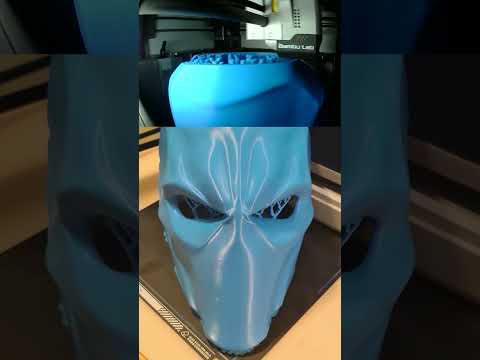 Deathstroke 3d printed wearable mask #shorts
Deathstroke 3d printed wearable mask with X1C BambuLab #shorts #3dprinting #deathstroke #bamb...




Advertising